
Technical SEO Mistakes That Hold Websites Back
A website can contain useful content, target relevant search terms and attract authoritative links, yet still struggle to perform in organic search. In many cases, the problem sits beneath the visible pages, within the technical structure that determines how search engines access, interpret and index the site.
Technical SEO is often treated as a checklist completed during a website launch or redesign. However, websites change continuously; pages are added, URLs are updated, plugins introduce new functionality and content management systems generate additional versions of existing pages. Over time, these changes can create conflicting signals that limit search visibility and make the site harder to manage.
The following technical SEO mistakes can prevent a website from reaching its potential, even when the wider marketing strategy is sound.
Sending search engines conflicting instructions
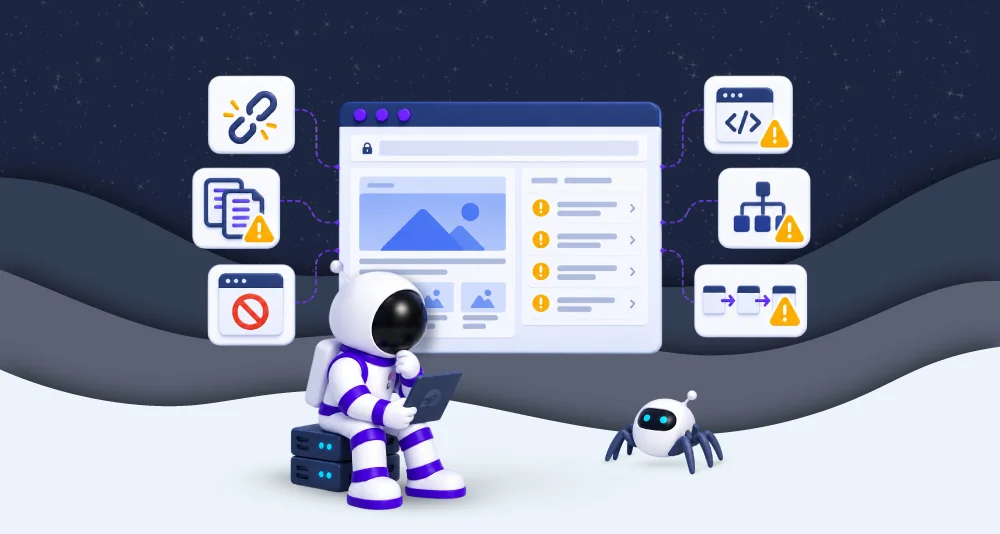
Search engines use several signals to decide which pages should be crawled and indexed. These include canonical tags, XML sitemaps, internal links, redirects and robots directives; when those signals contradict each other, search engines must decide which instruction to trust.
A page might appear in the XML sitemap while carrying a noindex tag, or an internal link may point towards one URL while the canonical tag identifies another version as the preferred page. Redirected URLs can also remain in sitemaps long after a website has changed.
Each individual mistake may appear minor, but a large website can contain thousands of these inconsistencies. Technical SEO should therefore focus on alignment; indexable pages should be accessible, internally linked, included in the sitemap and supported by a self-referencing canonical tag.
Allowing low-value URLs to consume crawl resources
Content management systems and ecommerce platforms can generate far more URLs than a business intends to publish. Product filters, search results, tag archives, tracking parameters and paginated pages may all create new combinations that search engines can discover.
This becomes a problem when search engines spend time crawling repetitive or low-value URLs instead of the pages that support the business. It can also lead to index bloat, where large numbers of thin or duplicated pages appear in the index and make the website’s important content harder to distinguish.
The solution is not to block everything indiscriminately. Each type of URL should be reviewed according to its purpose; some filtered pages may satisfy useful searches, while others should be canonicalised, excluded from indexing or prevented from being generated in the first place.
Relying on JavaScript for essential content and navigation
Modern websites often use JavaScript to load content, create interactive elements and control navigation. Search engines can process JavaScript, but that does not mean every implementation is reliable or efficient.
Problems arise when important text, links or product information only become available after a script has run. If that script fails, takes too long or requires an interaction that a crawler does not perform, the content may not be discovered correctly. Navigation built through buttons without crawlable links can leave parts of the site isolated, even though human visitors can reach them.
Essential content should be available in the rendered HTML wherever possible, while key pages should use standard links that search engines can follow. JavaScript can improve an experience, but it should not be the only route to information that needs to rank.
Treating redirects as a permanent substitute for good structure
Redirects are essential when pages move, products are removed, or a website is migrated. However, they are often added without reviewing the wider URL structure, which leads to chains, loops and irrelevant destinations.
A redirect chain occurs when one URL points to another, which then redirects again. These chains create unnecessary requests, slow down crawling and make future maintenance more difficult. Redirecting every removed page to the homepage is another common mistake; it provides little context to users and may be interpreted as a soft 404 rather than a useful replacement.
Redirects should take visitors directly to the closest relevant live page. Internal links and sitemaps should then be updated to reference the final URL, rather than continuing to rely on the redirect indefinitely.
Using canonical tags to hide duplication problems
Canonical tags help search engines understand which version of a similar page should be treated as the primary URL. They are useful for managing legitimate duplication, but they should not become a way to avoid fixing poor website architecture.
If hundreds of duplicated pages are being generated by the CMS, placing canonical tags on them does not remove the underlying crawl burden. Search engines may also ignore a canonical instruction when other signals suggest that the duplicate page should be treated independently.
Businesses should first understand why duplication exists. Unnecessary URLs may need to be removed, parameters controlled or templates changed; canonical tags can then support a clear structure rather than attempting to compensate for a disorganised one.
Focusing on a speed score instead of real performance
Page-speed tools are useful, but a high laboratory score does not guarantee that a website performs well for real visitors. Performance varies according to the device, network, browser, location and page template being used.
A team may optimise the homepage until it receives an impressive score while product pages, articles or enquiry forms remain slow. Large scripts, third-party tools, consent platforms and embedded media can also affect real-world performance in ways that a single test does not fully represent.
Website performance should be assessed across important templates and user journeys. Core Web Vitals data, analytics and device-level testing provide a more useful picture than one score; the objective is to create a consistently responsive experience, not to reach an arbitrary number.
Failing to check technical SEO after website changes
Many technical problems are introduced during routine updates rather than major redesigns. A developer may change a template, an editor may remove a page without arranging a redirect, or a plugin update may alter canonical tags across the site.
Without regular monitoring, these issues can remain unnoticed until traffic or enquiries decline. Even then, the connection may not be obvious because organic performance can change gradually.
Google Search Console should be reviewed for indexing changes, crawl errors and unexpected drops in impressions. Scheduled crawls can identify broken links, redirect chains, duplicated titles and altered directives; checks should also be completed after migrations, redesigns and significant CMS updates.
Technical SEO needs ongoing ownership
Technical SEO is not separate from website management. It is affected by content decisions, development work, hosting, analytics and the systems connected to the site; when responsibility is divided between several suppliers or internal teams, important issues can fall between them.
The strongest websites maintain a clear technical foundation as they grow. Their important pages are easy to find, their signals are consistent, and changes are reviewed before they create wider problems.
How purpleplanet approaches technical SEO
At purpleplanet, technical SEO is considered as part of the wider website system rather than a standalone exercise. We review how the site is structured, how search engines move through it and whether its technical signals support the pages that matter to the business.
This means looking beyond isolated errors or performance scores. We assess crawling and indexing, URL structure, redirects, canonical tags, internal linking, website performance and the way the CMS generates and manages content. Recommendations are then prioritised according to their likely impact; fixing a site-wide indexing problem should come before making minor adjustments to individual pages.
Our work also continues beyond the initial review. Websites change as businesses introduce new services, publish content and connect additional systems, so technical performance needs to be monitored and maintained over time.
If your website has useful content but is not gaining the visibility it should, purpleplanet can identify the technical issues holding it back and create a clear plan for resolving them.