
Website Maintenance: What Happens When You Ignore It?
A website can go a surprisingly long time without needing any obvious maintenance.
Pages still load, enquiries still come through, and, from the outside, everything appears to be working. That can make website maintenance easy to push down the priority list, particularly when there are more immediate demands on time and budget.
The problem is that websites do not stand still.
Browsers change, software is updated, security threats develop, third-party services change their requirements, and businesses continue adding content and functionality. A website that was secure, fast and easy to manage when it launched will not necessarily stay that way without ongoing attention.
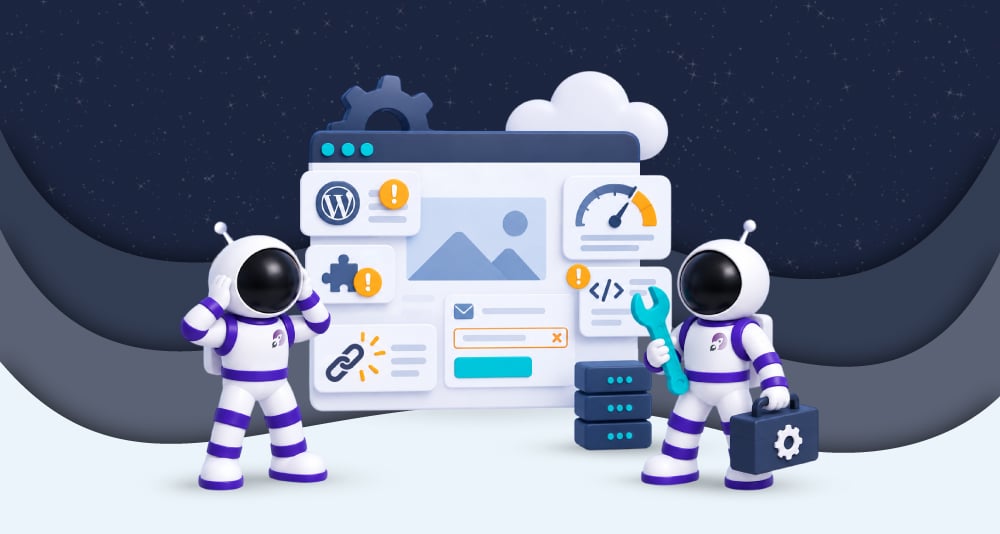
Ignoring website maintenance does not always result in one dramatic failure. More often, small problems accumulate until the website becomes slower, less secure and increasingly difficult to work with.
Security risks increase over time
Security is one of the clearest reasons to keep a website maintained.
Modern websites often rely on a combination of a content management system, plugins, themes, integrations and third-party tools. Each component can receive updates to fix bugs, improve compatibility or address newly discovered security vulnerabilities.
Leaving those components outdated creates unnecessary exposure.
This is particularly important for websites built on widely used platforms such as WordPress. Their popularity means vulnerabilities in plugins, themes and older software versions can become attractive targets.
Website security also extends beyond running updates. Backups need to work, user permissions should be reviewed, and suspicious activity needs to be identified before it becomes a larger problem.
Recovering a compromised website takes considerably more time than keeping its underlying technology maintained.
Performance can gradually decline
Performance often deteriorates over time as new pages are added, images are uploaded without optimisation, plugins accumulate, and additional scripts are introduced for analytics, advertising, chat tools and other services.
Each addition may seem insignificant on its own. Together, they can make a noticeable difference to how quickly pages load and how responsive the website feels.
This matters to the people using the site. Visitors have little patience for pages that take too long to load or interfaces that feel awkward, particularly on mobile devices.
Regular maintenance allows teams to monitor performance and deal with problems as they develop, rather than waiting until a slow website has become accepted as normal.
Small problems start affecting the user experience
Broken links, forms that no longer submit correctly, missing images and buttons that behave strangely are all fairly ordinary website problems. They are also easy to miss when nobody is regularly checking the site.
A broken contact form is particularly costly because the website can appear to be functioning perfectly while enquiries disappear in the background. The business may only realise there is a problem after someone mentions that they tried to get in touch.
The same applies to smaller usability issues. A broken link may not seem particularly serious, but several of them across a website make it feel neglected. Outdated information creates uncertainty, while poor mobile behaviour makes simple tasks unnecessarily difficult.
Visitors do not know that a problem is caused by an outdated plugin or a minor technical conflict. They simply experience a website that does not work as expected.
Your search performance can suffer
Website maintenance and SEO are closely connected.
Search engines need to be able to crawl and understand a website efficiently. Technical problems can make that more difficult, particularly when they affect site speed, mobile usability, internal links, redirects or page availability.
Content also needs attention.
A page that ranked well two years ago may contain outdated information today. Services change, search behaviour develops, and competitors continue improving their own websites. Old content can still have value, but leaving every page untouched indefinitely is unlikely to make the most of it.
Maintenance creates the opportunity to review what is already there. Existing content can be updated, internal links improved, old redirects corrected and pages that no longer serve a purpose dealt with properly.
SEO is an ongoing part of managing a useful website, rather than something completed during the original build.
Integrations do not look after themselves
Websites increasingly sit at the centre of several business systems. A contact form might send information to a CRM, an ecommerce website may connect with payment providers and stock management software, while marketing teams rely on analytics, consent platforms, email tools and advertising technology.
Those connections introduce dependencies.
Third-party providers update their software, APIs change, and authentication requirements are revised. Something that worked perfectly when an integration was first created can eventually need attention.
Problems here can also be difficult to spot. The website itself may look completely normal while data has stopped passing correctly between systems.
Regular maintenance should include the parts of the website that visitors cannot see, because those are often the parts the business relies on most.
The website becomes harder for your team to manage
Neglected websites create problems internally as well; small workarounds begin to appear. Someone knows that a particular page cannot be edited without breaking the layout. Another person avoids updating a plugin because it caused a problem last time. Publishing a new piece of content takes far longer than it should.
Eventually, the team starts working around the website rather than with it.
A well-maintained website should remain useful to the people responsible for running it. Keeping the underlying system organised and up to date makes day-to-day changes easier and reduces the amount of technical debt that builds up over time.
Problems become more expensive to fix
Putting off website maintenance can save money in the short term, but it often moves that cost further down the line.
There is a considerable difference between updating and monitoring a website regularly and trying to repair several years of neglected software, outdated integrations and accumulated workarounds at once.
In some cases, businesses reach the point where making improvements to the existing website becomes disproportionately difficult. A relatively straightforward change exposes another problem, which exposes another, and what should have been a small development task becomes much larger.
Regular maintenance spreads that work over the life of the website. Problems can be addressed while they are still manageable, and improvements can be made without waiting for the next major redesign.
Website maintenance is part of running the website
A website does not need constant intervention, but it does need attention.
Updates, backups, security, performance, content and integrations all form part of keeping a website useful. The exact maintenance required will depend on the size and complexity of the platform, but leaving it untouched for years is unlikely to be the cheapest or simplest option in the long run.
A good website should continue supporting the business well beyond launch. Maintaining it is part of protecting the investment already made in building it.
How we approach website maintenance at purpleplanet
At purpleplanet, we see website maintenance as an ongoing part of managing a successful platform. We stay familiar with the websites we support, keeping an eye on updates, security, performance, integrations and the changes businesses need over time.
That continuity means problems can be dealt with before they become larger projects, while the website continues to evolve alongside the business.
The aim is simple: to keep your website secure, reliable and useful long after it goes live.