
Why Consistency Beats Creativity When Growing Your Website
There is a common belief that the businesses with the best websites are the ones that come up with the most creative ideas.
The boldest campaigns, the biggest redesigns and the latest features.
Creativity certainly has its place, but it is not what drives long-term growth.
The websites that continue to generate leads, support sales teams and improve business performance are the ones that are consistently maintained, measured and improved over time.
That is because a website is not a marketing campaign; it is a business asset.
If you only think about your website when it feels outdated or stops performing, you are asking it to carry far more weight than it should. Growth tends to come from making small improvements regularly rather than waiting for the perfect idea or the perfect redesign.
Businesses often expect too much from a redesign
One of the biggest misconceptions we see is that a new website will solve every problem overnight. It’s understandable; a redesign feels like progress, it’s tangible, exciting and easy to measure.
The challenge is that a website can only perform as well as the strategy behind it.
If your messaging is unclear, your content has not been updated for years, or nobody is looking at how visitors behave once they arrive, a redesign alone is unlikely to transform your results.
A successful website is something you continue to develop as your business evolves.
Small improvements create momentum
Think about how most successful businesses operate.
They don’t reinvent everything every six months. They review what is working, identify opportunities for improvement and make changes that move them forward.
Your website should be treated in the same way.
Sometimes that might mean improving the navigation because users are struggling to find key information. Sometimes it could be refining your messaging after speaking to customers. It might simply involve making pages load faster or improving the journey from enquiry to conversion.
None of those changes is particularly dramatic on its own.
Together, they can have a significant impact.
The businesses that see sustained growth are the ones that keep asking the same question.
How can we make this a little better than it was last month?
Data should guide decisions
Creativity is valuable when it solves a problem.
The difficulty comes when creative decisions are based on assumptions rather than evidence.
It is easy to become attached to a design, a headline or a new feature because it looks impressive.
Your customers may feel differently.
Website analytics, heatmaps and user feedback often tell a completely different story from internal opinions.
You may discover that visitors are abandoning a page earlier than expected, that an important call to action is being overlooked or that a service page is attracting far more attention than you realised.
Those insights provide direction.
Instead of changing your website because you feel it needs something different, you are making informed decisions based on how people are actually using it.
That approach almost always delivers better long-term results.
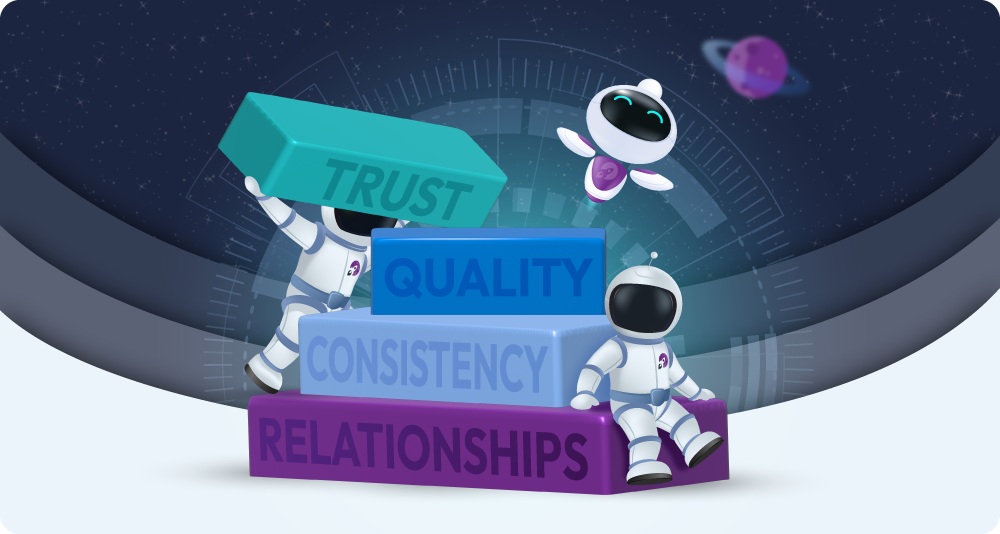
Consistency builds trust
Your website is often one of the first interactions somebody has with your business.
It should give people confidence that they are dealing with an organisation that is active, professional and invested in its own standards.
When case studies are several years old, news sections have not been updated, and services no longer reflect what the business offers, visitors naturally begin to question how current everything else might be.
On the other hand, a website that continues to evolve sends a different message.
Fresh content, relevant examples and ongoing improvements demonstrate that the business is moving forward.
Those updates are not just beneficial for visitors. They also provide search engines with signals that your website remains active and relevant.
Growth is cumulative
Many of the biggest improvements we see are not the result of one major project.
They come from dozens of smaller decisions made over time:
- Improving page speed.
- Clarifying messaging.
- Adding stronger client evidence.
- Testing different calls to action.
- Expanding service pages.
- Publishing useful content that answers genuine customer questions.
Each improvement contributes something.
Viewed individually, they may seem minor, but together they create a website that performs far better than it did a year earlier.
That is why consistency is so powerful.
You are not relying on one brilliant idea to transform performance; you’re building momentum through continuous improvement.
Creativity still matters
None of this is to suggest creativity is unimportant. Creative thinking helps businesses stand out, communicate their personality and present ideas in engaging ways.
The difference is that creativity works best when it sits on top of a strong foundation. There is little value in creating an award-winning homepage if visitors struggle to navigate the rest of the website.
Likewise, there is no benefit in introducing impressive animations if they slow the experience down or distract users from taking action.
The most successful websites balance creativity with usability, performance and continuous refinement.
Think beyond launch day
One of the biggest mindset shifts a business can make is to stop thinking about websites as finished products.
Launching a website should be the beginning of the process, not the end. That’s why our relationships with clients do not stop once a website goes live.
We continue reviewing performance, analysing user behaviour and identifying opportunities to improve. Sometimes those changes are technical. Sometimes they are commercial. It might be refining the messaging after speaking to customers, improving a conversion journey or making it easier for people to find the information they need.
Over time, those small improvements compound.
That approach allows your website to evolve alongside your business rather than becoming something that gradually falls behind.
At purpleplanet, we do not believe in launching a website, handing over the keys and disappearing.
We see websites as long-term business assets that should continue to grow, improve and deliver value long after launch day.
Because whilst creativity might make a great first impression, consistency is what delivers results year after year.
If your website feels like it has stopped moving your business forward, we’d be happy to take a look and help you identify where the biggest opportunities for growth lie.