
Website Integrations: Common Problems and How to Avoid Them
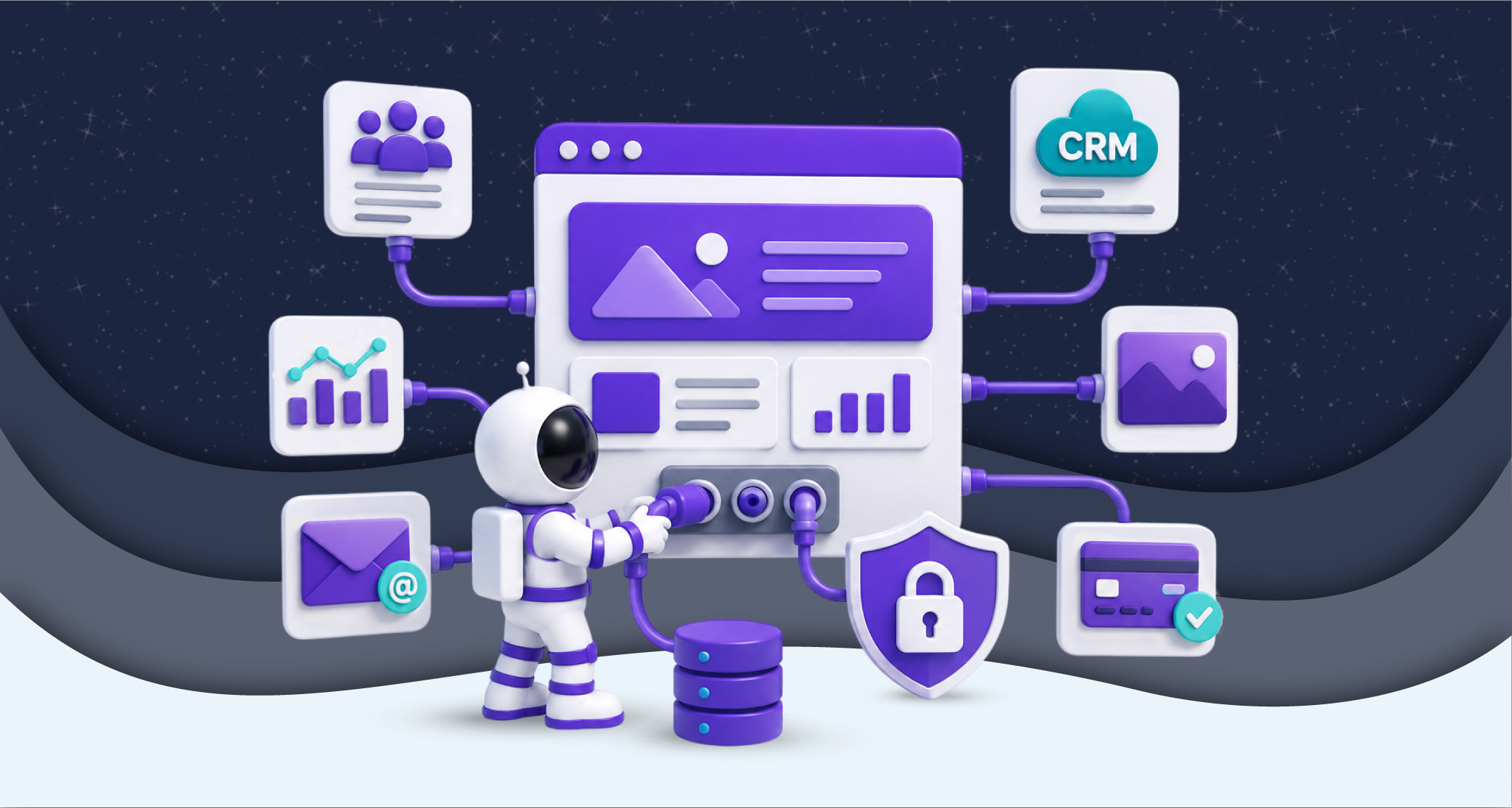
Modern websites don’t operate in isolation. They connect with customer relationship management systems, marketing platforms, payment gateways, booking software, analytics tools and countless other business applications.
These integrations help automate processes, improve efficiency and create a better experience for both customers and internal teams.
When they work well, they become part of the background; information flows between systems, manual tasks are reduced, and businesses gain greater visibility over their operations.
When they do not, the consequences are far-reaching.
Poor website integrations can lead to inaccurate data, failed enquiries, broken customer journeys and unnecessary administrative work. They also create frustration for users, who rarely distinguish between a problem with your website and a problem with an integrated system. From their perspective, the experience simply does not work.
Website integrations require careful planning, ongoing monitoring and an understanding of how every system supports the wider business.
An integration should improve a process
Businesses often introduce new software with the intention of making operations more efficient. Over time, however, additional platforms are added to solve individual problems, resulting in a collection of systems that have never been designed to work together.
A website may collect enquiries through one platform, store customer information in another, send emails through a third and generate reports somewhere else entirely. Every additional integration increases complexity, making it more important that information moves reliably between systems.
Without a clear strategy, businesses can find themselves relying on manual work to bridge the gaps that technology was intended to remove.
Data quality depends on reliable integrations
Accurate data underpins good decision-making.
When website integrations fail, duplicated records, incomplete customer information and inconsistent reporting often follow. Sales teams may contact the wrong people, marketing campaigns become less effective, and businesses lose confidence in the information they rely on every day.
Many of these problems develop gradually rather than appearing overnight. A small issue with field mapping or synchronisation may go unnoticed for weeks before affecting reporting or customer communication.
Regular monitoring helps identify problems before they begin influencing wider business performance.
Customer experience should remain seamless
Visitors do not think about integrations when they complete a contact form, make a payment or book an appointment; they expect every part of the process to work without interruption.
When an integration fails, confidence can disappear quickly. Confirmation emails fail to arrive, payments cannot be processed or information entered into a form never reaches the intended destination.
These issues affect more than operational efficiency; they influence how customers perceive your business.
Every interaction should feel consistent from the visitor’s perspective, regardless of how many systems are working together behind the scenes.
Security cannot be overlooked
Every integration introduces another connection between systems, making security an essential consideration throughout the development process.
Third-party platforms often require access to customer information, business data or transactional records. Those connections should always follow best practice, use secure authentication methods and be reviewed regularly to ensure they remain appropriate.
Software updates, changing APIs and evolving security standards mean integrations cannot simply be implemented and forgotten. They require ongoing maintenance to remain secure and reliable.
Protecting customer data should always remain a priority.
Plan for future growth
Businesses change over time. New services are introduced, software platforms evolve, and operational requirements become more complex. Website integrations should support that growth rather than limiting it.
Choosing flexible systems and designing integrations with future development in mind reduces the likelihood of costly redevelopment later. It also makes introducing new technology significantly easier as business requirements change.
Scalability is often overlooked during the early stages of a project, but it has a significant impact on the long-term value of a website.
Test beyond launch
Many businesses thoroughly test integrations before a website goes live but assume they will continue working indefinitely.
In practice, websites exist within an environment that changes constantly. Software providers release updates, APIs are modified, and third-party platforms introduce new functionality. Any of these changes can affect how systems communicate.
Monitoring integrations should form part of ongoing website support rather than being viewed as a one-off exercise during development.
Every integration should have a purpose
It can be tempting to integrate every available platform simply because the option exists; but more integrations do not automatically create a better website. Each one introduces additional complexity, ongoing maintenance and another potential point of failure.
Every integration should support a clear business objective, improve efficiency or enhance the customer experience. Where it does not, it is worth questioning whether it adds value.
A simpler, well-managed technology stack is often more effective than one built around unnecessary connections.
How we approach this at purpleplanet
Website integrations should never be viewed as isolated technical features. They influence customer experience, operational efficiency, reporting accuracy and the ability of different teams to work effectively together.
At purpleplanet, website integrations are approached with the wider business in mind. We take the time to understand how different systems interact, how data needs to flow and how each integration supports your objectives.
Every connection is designed to improve efficiency, strengthen reliability and create a better experience for both your team and your customers, ensuring your website continues delivering value long after launch.